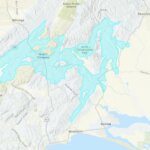
Communities and businesses in Mount Compass rely on the Permian sand aquifers for safe drinking, industrial and irrigation water supplies. In 2025, the Department of the Environment and Water provided a factsheet (embedded below) on water security for Mount Compass, which demonstrated that the sand distribution is spread unevenly across the region with significant variation in the depth of one part of the aquifer to another. There is one graphic which shows a cutaway profile of the section of the aquifer which supplies SA Water being significantly deeper than the one supplying patrons of the Golf Course Estate.
Water management has long been an issue in South Australia. Some of it first legislation was to ensure the equitable distribution of water of landholders. Much of the water supply on the Fleurieu is sourced from ground and surface water by aquifers and dams respectively.
The Mount Compass area resides in a geological region defined as the Cape Jervis Formation. The South Australian Resources Information Gateway (SARIG) provides digital access to the South Australian geological information through the use of mapping tools and an online catalogue of reports.
Mount Compass has an ancient geology spanning back in time some 2500 million years, including a complete glaciation in the Permian period yielding much of its present topography.
The Swamps of the Fleurieu Peninsula are localised wetlands occurring in high rainfall areas in the local catchment areas of Tookayerta, Hindmarsh, Parawa, Myponga, Yankalilla, Onkparinga, Currency Creek and Finniss. They are densely vegetated and occur adjacent to waterlogged soils around low-lying creeks and flats. The Swamps are typified by their reedy or heathy vegetation growing on peat, silt, peat silt, or black clay soils.
The Missing Library acknowledges the Ngarrindjeri, Peramangk, and Kaurna peoples as the traditional custodians of the lands and waters within its district and respects their spiritual connection to Country and acknowledges that their cultural heritage and beliefs remain important today.